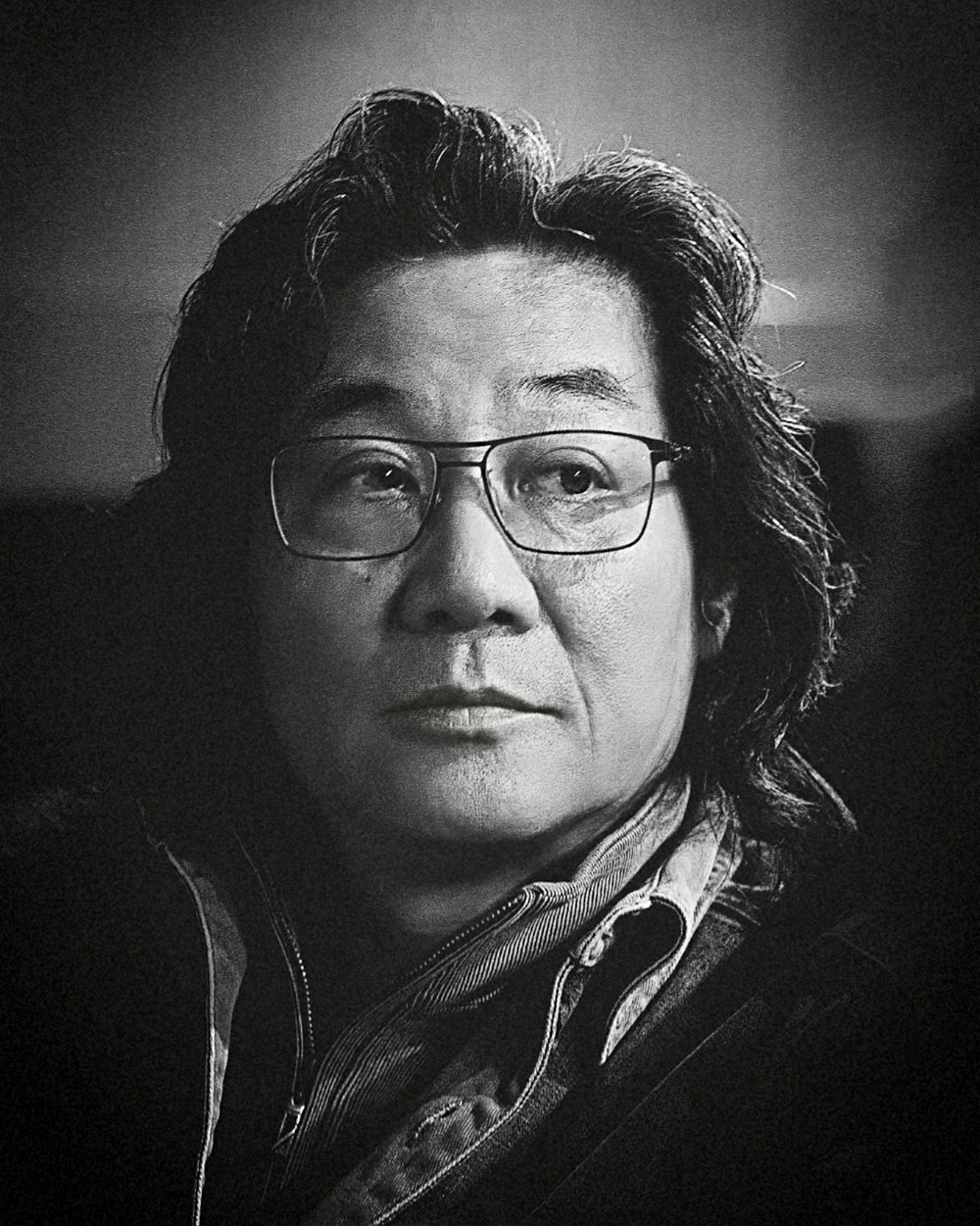
Ji Qiao
graduated from Shanghai Theatre Academy, is a National Class one stage designer. He is the Senior Vice Chairman of China Institute of Stage Design.
His work was presented in the World Scenography (1990-2005), 3rd World Stage Design, 12th & 13th Prague Quadrennial, World Stage Design 2017 Exhibition and the 1st - 3rd National Stage Design Exhibition of CISD. He has been awarded Golden Lion Award, Wenhua Prize and many national awards.
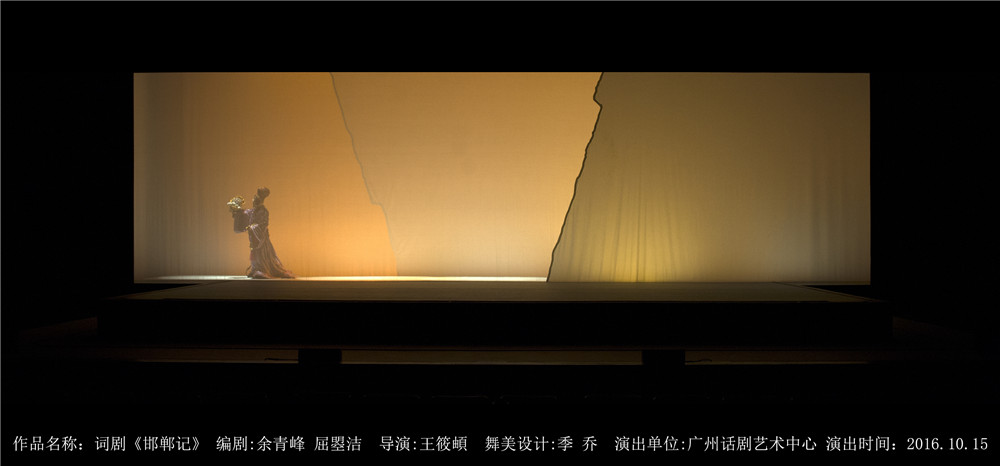
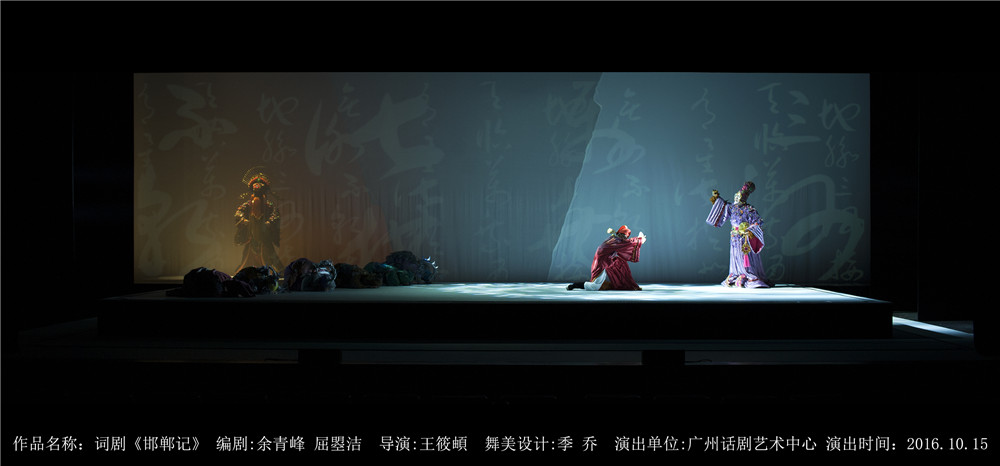
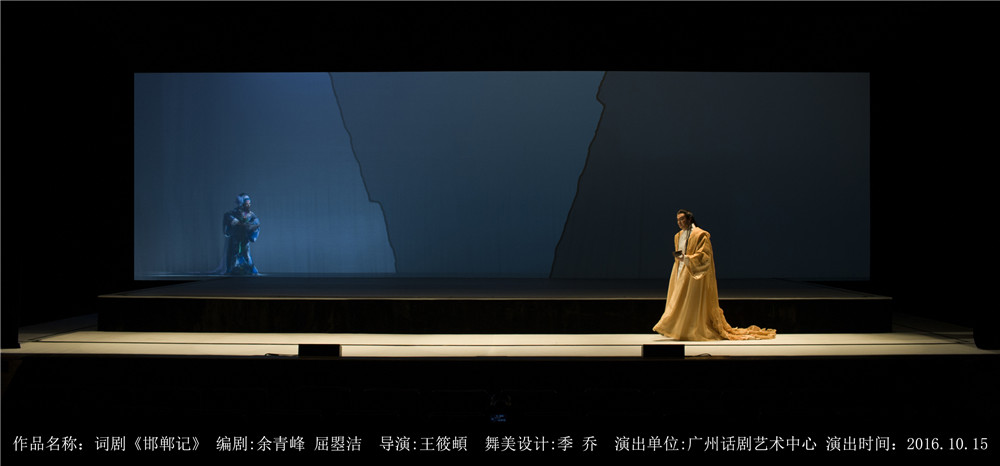
The stage of Tale of Handan is free designed instead of being deliberately designed, and it could be both noble and civilian.
Main part of the stage: A square table is put in the very central of the stage. It creates varying height and spaces on the stage, reflecting the “within dream” and “outside dream” status accordingly. Footlights are positioned behind the table, creating an interaction between characters and the stage view.
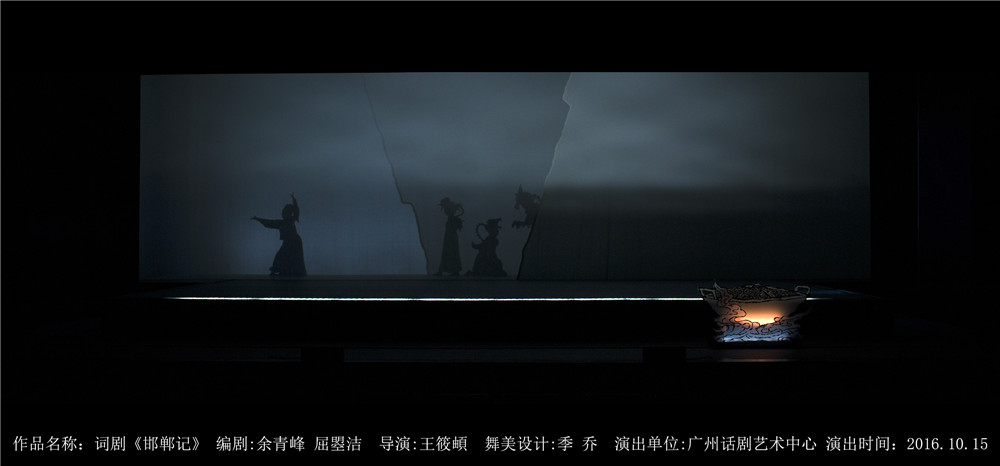
Circular curtain:It does not focus on the pattern. Some places are translucent and the others are not, thus generating a natural change of view.
Lines: Two lines are positioned in front the circular curtain, some parts are straight and some are curve. They do not have any specific meaning, but creating a top view and scenes which can be changed as required. They are sometimes bright and sometimes dark, reflecting the happiness and sorrow in life.
Scenes: A bird’s view is used. Using the contrast of details to highlight the grandness. The use of some simple but detailed lines enable the audience to connect with the story, and enable the dream maker to take advantage of these images.
Except for the use of visual signs, this design also delivers symbolic signs, which is exploring other meanings of “shape” from the aesthetic perspective.
The director of this drama uses “spacing” and “leaving” as the main stage techniques. Going beyond the “time” and “space”, She uses many usual techniques. For example, She has introduced many traditional Chinese instruments such as Flute and Erhu, and has used the singing techniques of Kunqu. Further, it includes both singing and lines, suiting both refined and popular tastes. It creates a special and innovative means of expression for the renowned Tale of Handan.
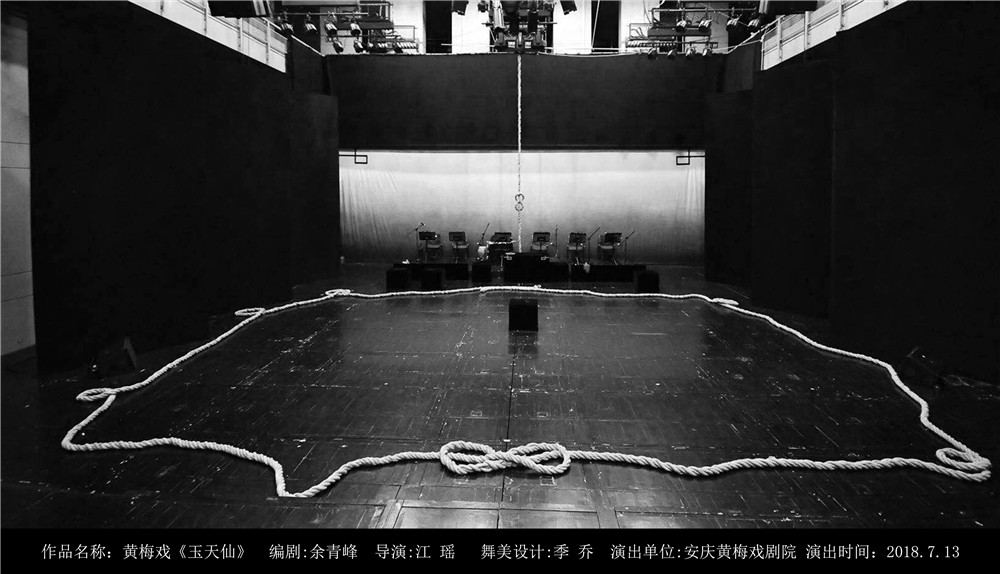
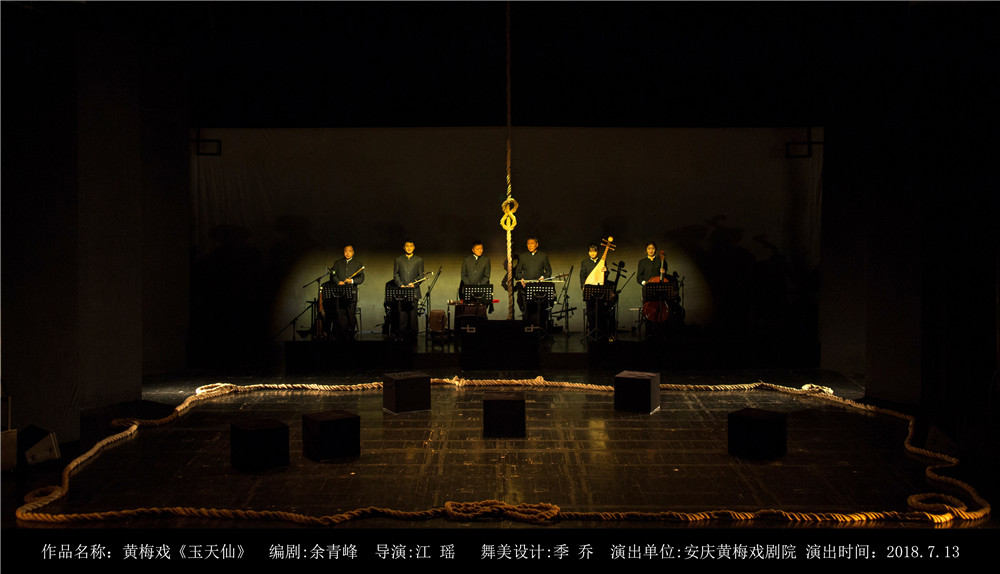
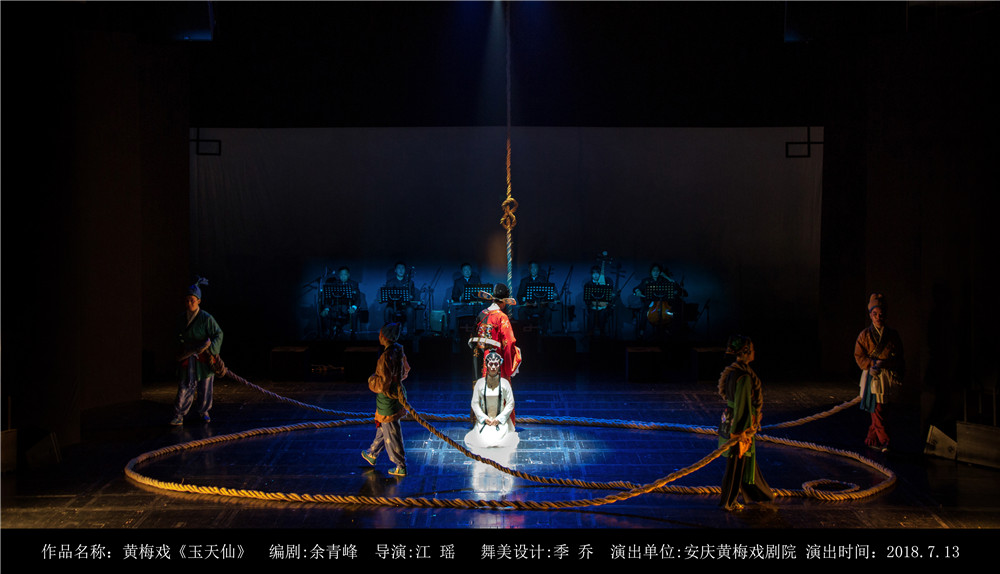
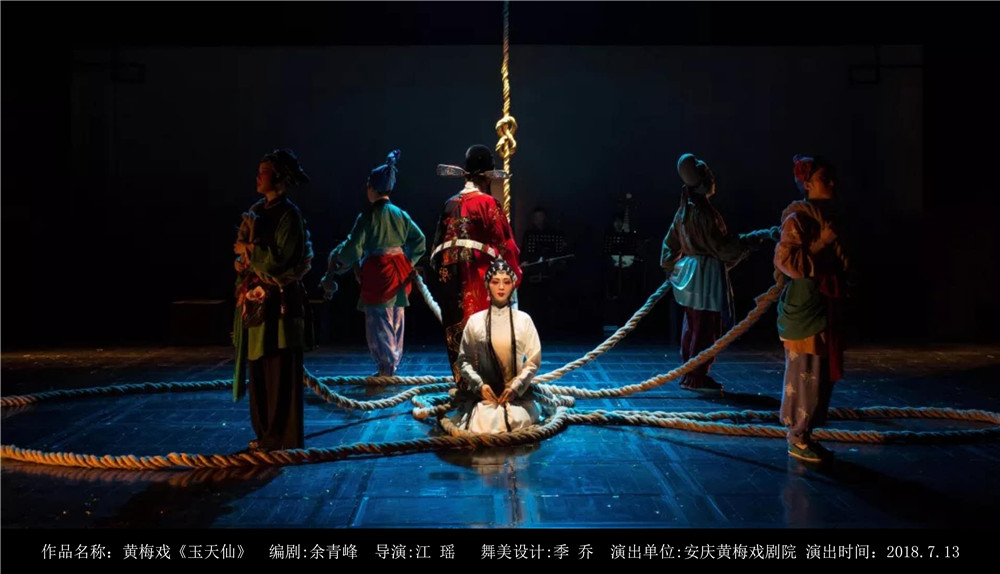
The main theme of this design is to use a “less is more” principle to display the performance space.
The author of “Yu tianxian” derives the value of life from women’s choices over their thousands of years of history. However, the acceptance toward such value is rather slow throughout the evolution of human nature. Therefore, the space is an extension of such value.
The design of Yu tianxian is very difficult to interpret solely in language.
The space design of it is a special condition between a seemingly “full” and an unconscious, “hard to define” status. The “knot” wakes up these “unconsciousness” at impressive moments.
People should witness the depression of human nature,and the performance choir only represents the reconstructed soul.
The specific knots and knot circles are independent but inter-related, representing an unusual torment of soul.
The image of “knots” naturally combines the “depression” from the script and what the spatial vision aims to express. With the introduction of the original Huangmei tone,the pursuit of a happy life has been well reflected in the space design. Then a simple but ethereal space can be achieved, which provides profound implications.
季乔
毕业于上海戏剧学院舞台美术设计系
国家一级舞美设计师
广东省舞台美术研究会名誉会长
《绿色的阳台》《西关女人》《阳光地带》《等郎妹》《十三行商人》《天籁》《米脂婆姨绥德汉》《春雪润之》《苏武牧羊》《我的麦哲伦海峡》《威尼斯商人》《麦克白》《富春山居图》《邯郸记》等。
第十五届亚洲运动会闭幕式 中国广州--“东方神韵”;超越梦想——中华人民共和国第九届全国运动会闭幕式大型文艺晚会;第九届中国艺术节开、闭幕式;大型史诗——龙凤舞中华;第四届中国京剧艺术节开幕式;中国越剧百年盛会开幕式等。
2004—2007年度中国话剧舞台金狮奖、2011年中国戏曲现代戏贡献奖。
文华舞美设计大奖、文华舞美设计奖、文化部优秀舞美设计奖、中国戏剧精品剧目奖、中国舞台美术学会奖、中宣部五个一工程奖、中国戏剧节优秀舞美设计奖等。
多次参加世界剧场设计大展(Prague Quadrennia)。
广州话剧艺术中心(2016.10.15)
空间设计择于清淡而野逸,随性而存意,亦俗亦可大雅。
主体:距舞台中轴设方台一座,形之高低,错落有致,且与梦里梦外,梦中之戏攸关。并置有脚光暗藏,光景有趣,为人物之扮相作铺成。
环幕:不重规则之争,隔之“透”与“不透”为间离,有掇景于笔意之态,其幻聚注于旋转之轨迹而视“出将、入相”之阈。
线骨:环幕前设一上下横线,曲折相间,无貌,无象,但有临视,仰高之势,隐遁之所。忽明忽暗,摅发“邯郸道,尽头乃人生得意之处”之意境。
景别:取“临上下瞰”之法,物以小观大,取其拙扑,廖以数笔,略带冗细。为悟者托情,为梦者借景。
整体空间除独立表达视觉语汇外,且暗喻臆象符号,在审美意识下揣度“形”外之言。
此剧导演以“扮演”之法则,间离之时空,不落前人窠臼,引大笛,二胡,叠韵双声,涉句词,歌诵雅俗诙谐,为名著《邯郸记》独开生面。
黄梅戏《玉天仙》空间设计
空间以极少的理念来呈现极致又纯粹的观演样式。
《玉天仙》作者以女性在几千年生命自我抉择中,引伸出"把有价值的东西撕破给人看",重起“玉天仙”喻示的生命价值。然,千百年来对这认同和价值在人性的进化中极为滞缓。因而,空间形态应其"价值"表达与之文本相对应的延伸。
一种仅限文字难以切入的"视觉语系"。
空间介于一组貌似盈满沉静但又无法确定其属性的"无意识",“绳结”在令人惊异的瞬间将这"无意识"敲醒。
我们应旁证生命转承中作为"人性"在桎梏下的呻吟,群体的低声吟唱只是被"重塑"的灵魂而已。
特定的绳结,绳套,绳圈囿于彼此间的独立並置,犹如一场超越常态的拷问。
"绳"将文本的隐忍和视觉的暗喻融为同体,道法自然地使二者趋于重叠,还原最为原始的词韵之律,人性向美而生的一次侧影投射。以其达到简约、灵空,在理性上经得起咂摸。



 010-64035684
 CISD_Official@cisd.org.cn
 北京市东城区东棉花胡同39号 中国舞台美术学会
移动网络媒体的新闻支持
完善的互联网媒体与交流平台
全球化的学术与行业交流活动
京ICP备14039820号-1