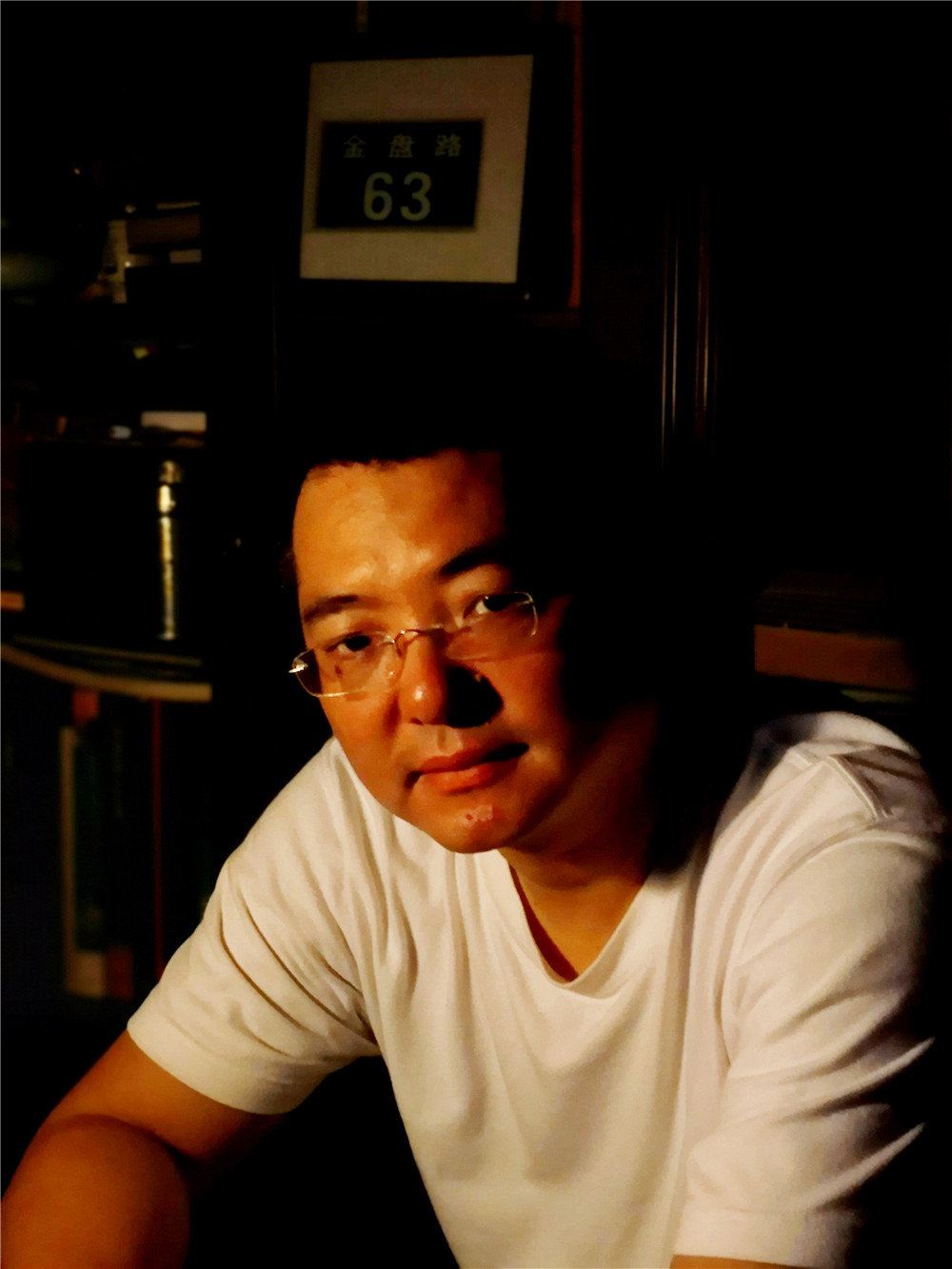
Xiong Chunhong
graduated from Shanghai Theatre Academy, is a National Class one stage designer. He is the vice president of Guangdong Stage Artistic Research Association.
His work covers drama, dance drama, musical, Cantonese Opera, and space art design. His work was presented in the 3rd National Outstanding Young Designers Solo Exhibition of China Institute of Stage Design, World Stage Design 2017 Exhibition (WSD2017) and 2017 Young Designer Invitation Exhibition of China Institute of Stage Design. The designer has been awarded Wenhua Prize, China Institute of Stage Design Award, and First Prize of Stage Design in Guangdong Arts Festival.
The life-long pursuit of traditional Chinese literati is the ability to shoulder the social responsibility while not obsessed with the loss of personal interests. People usually admire this status and call it “The realm”. In the history of Eastern Han dynasty, there is such a respected man. He retired from the public life after contributing to the stability of the country, without obsessed with personal reputation. It is his broad mind that left this country a respectable and intelligent realm.
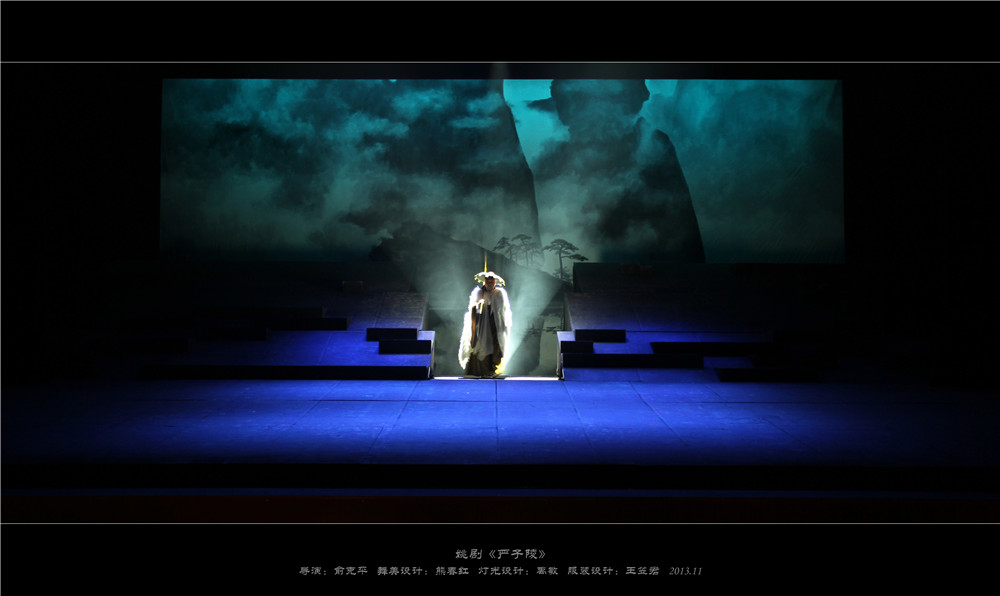
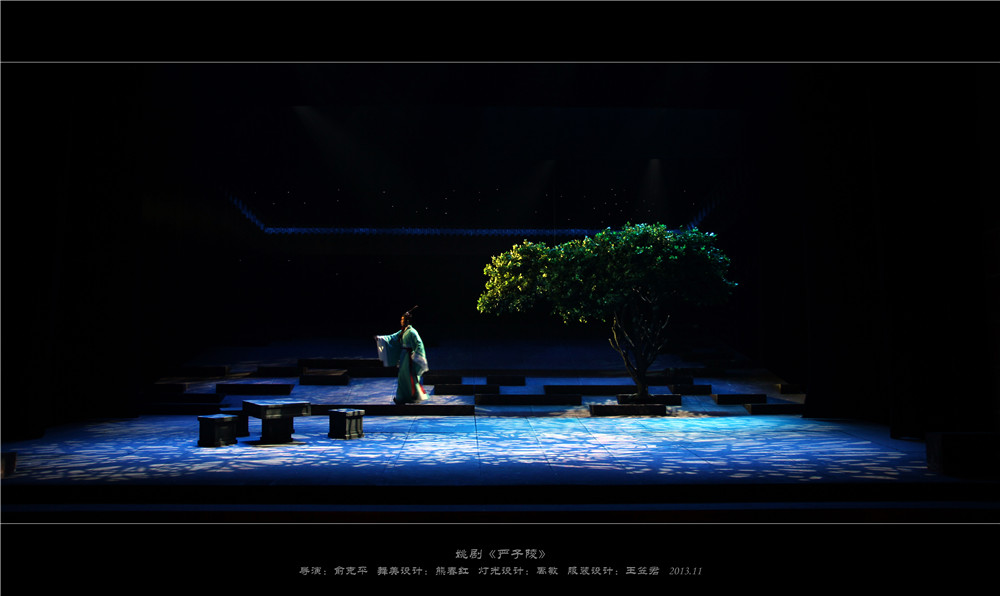
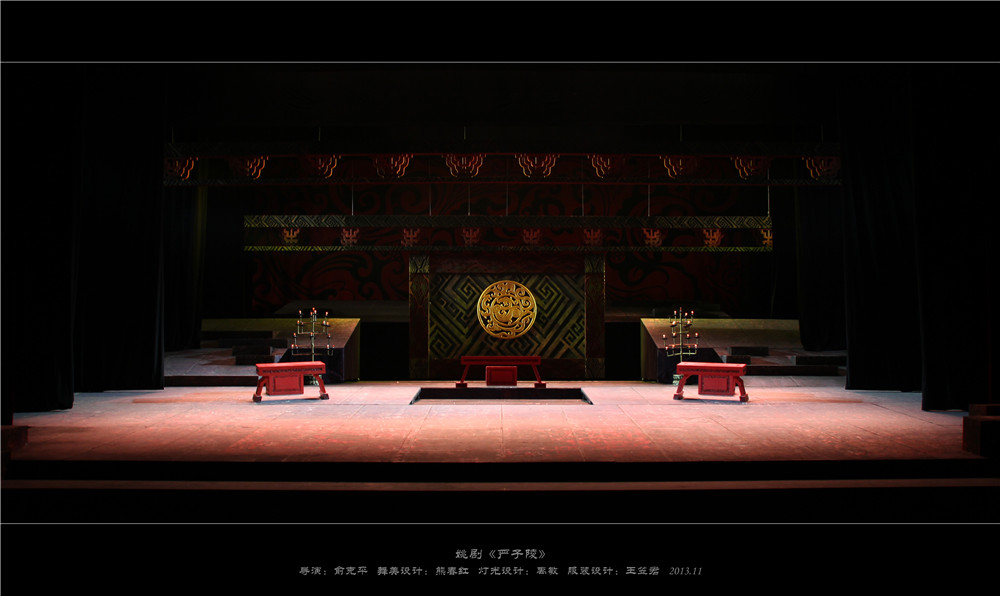
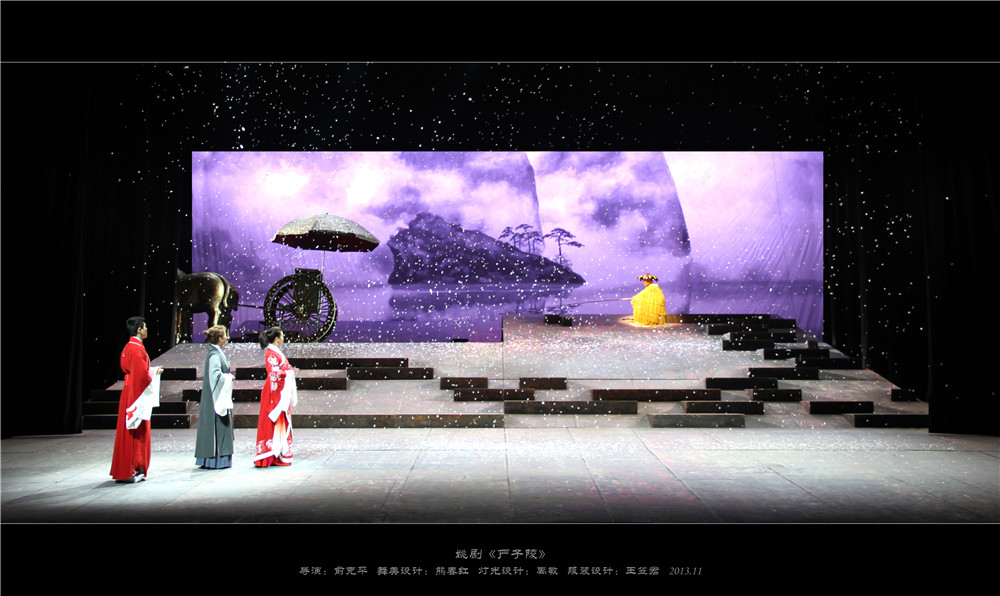
Before Han dynasty, the aesthetic orientation of Chinese culture is “simple but powerful” and “harmony between men and the nature”. These are reflected in the Cloud Patterns, portrait Brick and the bronze of Han dynasty, which form the stage space of Yan Ziling. These typical visual features reflect Yan Ziling’s aesthetic taste and his life philosophy.
The stage space of Yan Ziling is simple but meaningful. It reflects Yan’s powerful control ability. The stage will open when something is going to happen, and close otherwise. The simplicity of the space and the powerful bronze reflect Yan’s broad mind. His life path was also recorded in theses fragments of civilization. Finally, all go back to historical tranquillity, creating a status of no trace.
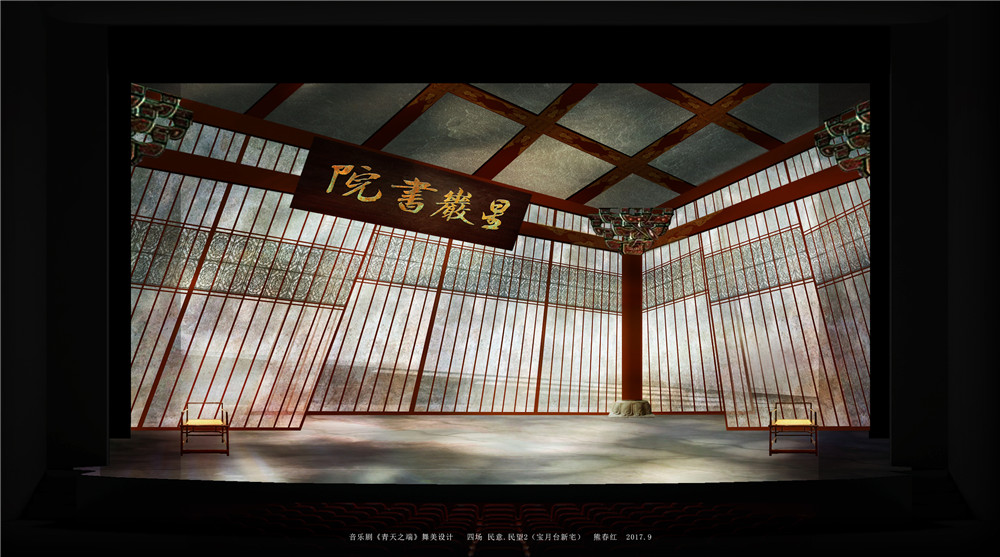
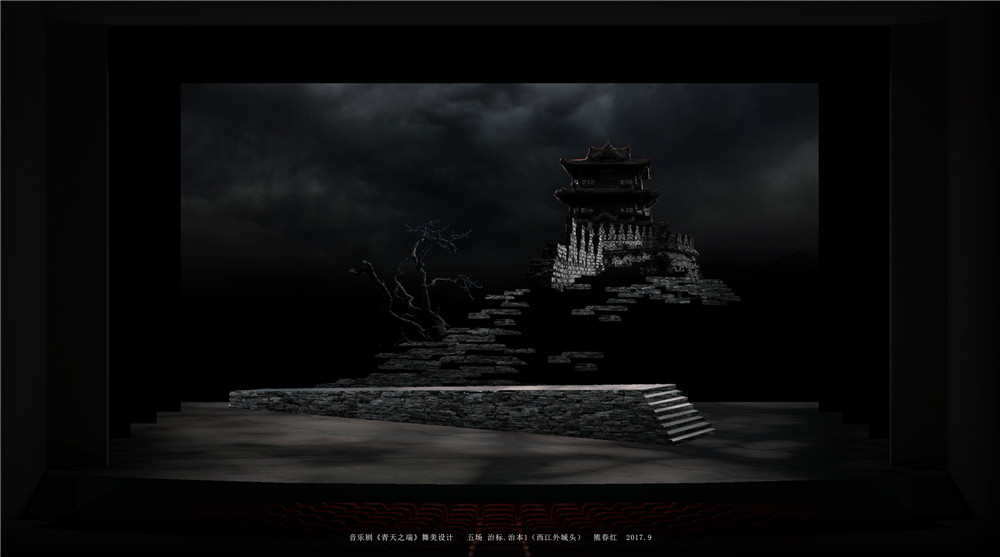
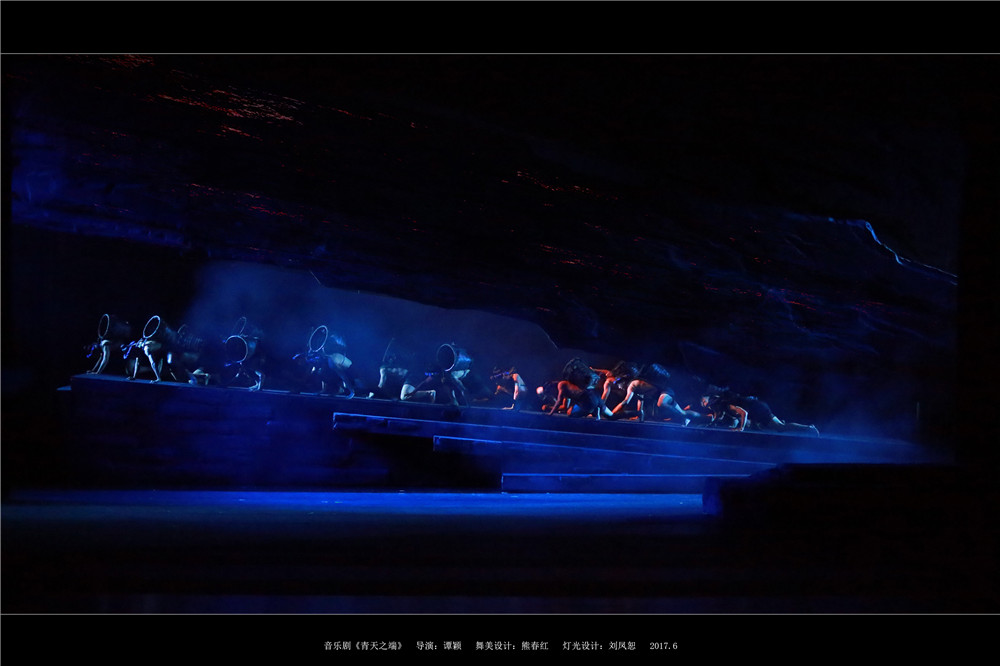
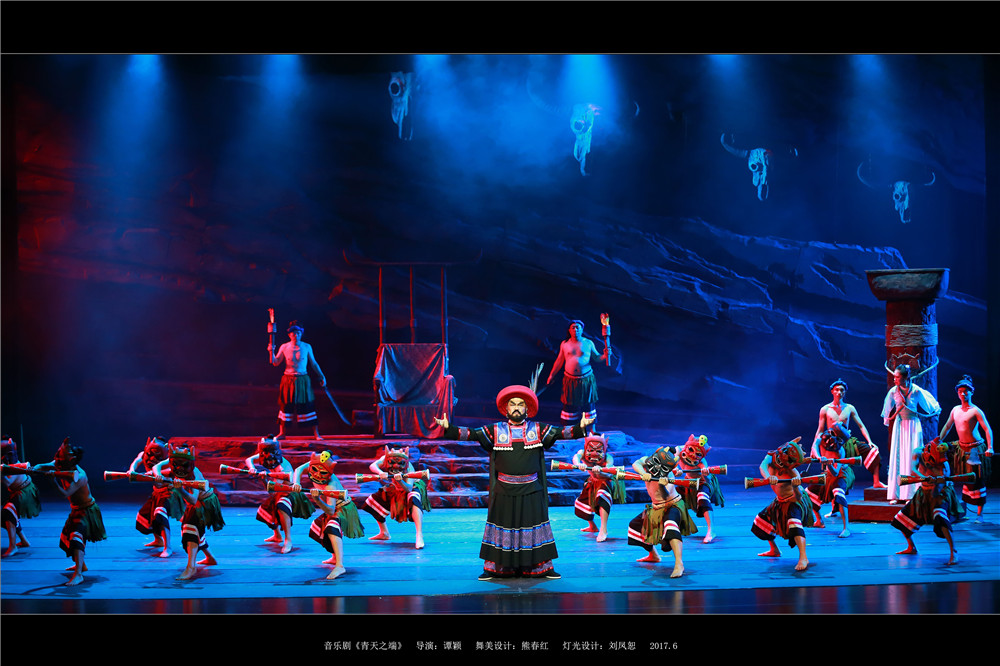
The three sets of stones form the framework of the stage. The cold and hard quality of Duan stones, Seven Star Crags and stones of Yao Village all reflect Bao Zhen’s reason and determination. Further, a grand and deep perspective of the interior of Xingyan Academy and Songtai Station respectively mirror Bao’s kindheartedness. All these designs have made it possible to conserve his subjective determination in the realist world. This is also why he achieved such a high level of spiritual life that reaches the “Top heaven”.
熊春红
国家一级舞美设计。毕业于上海戏剧学院舞台设计专业。现为广东省舞台美术研究会常务副会长,广州歌舞剧院驻团舞美设计。
设计作品包括话剧、舞剧、山歌剧、粤剧、儿童剧、姚剧、大型主题文艺晚会、艺术空间设计等。舞台设计作品入围国家舞台精品工程,入选中国舞台美术学会第三届全国舞美展优秀青年设计师个展单元,入选2017WSD世界舞台美术作品展,设计作品曾获中国舞台美术学会“学会奖”,文华剧目奖,多次获广东省艺术节舞台设计一等奖。
舞台设计作品:话剧《多宝、多宝》《生如夏花》、粤剧《碉楼》《白蛇传·情》、儿童剧《寻找花之城》、音乐剧《青天之端》《爱在少年时》、姚剧《严子陵》、艺术空间装置《寻墨》《静与光》等。
姚剧《严子陵》
导演:俞克平
舞美设计:熊春红
灯光设计:禹敏
服装设计:王笠君
演出团体:浙江省余姚市姚剧传习所(2013.11)
中国文人历来追求一种理想的人生坐标,既“心有大千而不着一尘”。人们很崇敬这种人生态度并称之为“境界”。在东汉历史中就真实存在着这么一位“功成,身退”的风骨人士严子陵,他的胸怀为后世留下了一片高尚、旷达的智慧境地。
音乐剧《青天之端》
作者:熊春红
职务:舞美设计
导演:谭颖
编剧:陈晓琳
作曲:高佳 宋超
灯光设计:刘凤恕
演出团体:肇庆大学(2017.9)
广东肇庆的端石因为文人喜爱端砚而举世闻名,文人出身的名臣包拯因为刚正廉洁而家喻户晓。二者的品格刚毅,注定会碰撞出必然的关联。
包拯在中国百姓心中有着特殊的、固定的、近乎完美的想象,他又是宋朝真实存在的人物,时代背景特征不好随意更改。此时音乐剧《青天之端》的舞美空间就只好从人物性格处寻找空间的气质,那就是刚直和仁义并存的坚毅。好在端石也具备这种特质,恰好又在历史事件中交集。这才在相对要求写实的场景中赋予舞台性格气质的余地。



 010-64035684
 CISD_Official@cisd.org.cn
 北京市东城区东棉花胡同39号 中国舞台美术学会
移动网络媒体的新闻支持
完善的互联网媒体与交流平台
全球化的学术与行业交流活动
京ICP备14039820号-1